|
Roberty
Downey Jr
Profiles
Marvel
Slots Marvel
Slots Online Iron-Man
II
Mickey
Rourke Stan
Lee
Marvel
Entertainment




Media
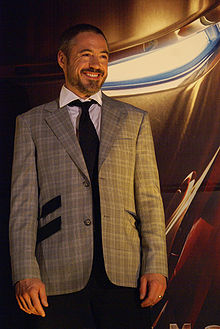
Man does not represent Robert Downey Jr
IRON
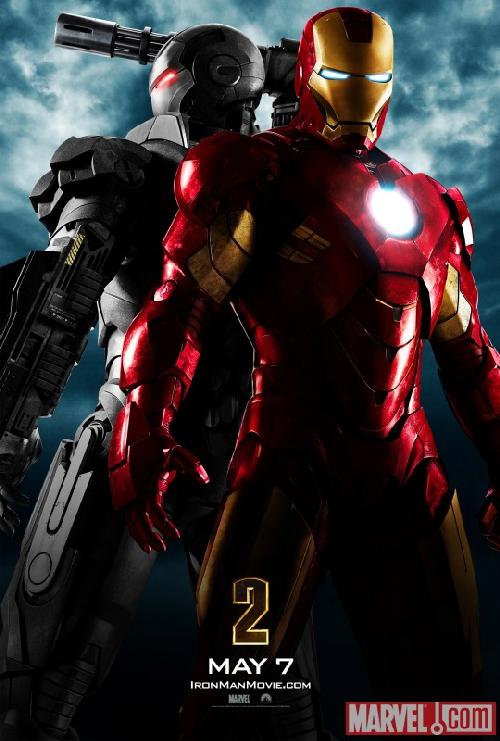
MAN II Promo


Profiles
Marvel
Slots Marvel
Slots Online Mickey
Rourke Stan
Lee Marvel
Entertainment

Review
Iron
Man is one of the great new Marvel slots developed
by Cryptologic. The first range was such a hit with
online slots players that the company has now followed
up with more, based on the legendary comic book characters
of yore. This is an action packed 25 line slot, with
a max bet of 25 coins. The bet range is really wide,
so you can play it without having to shell out too
much, or go for broke with some sizeable bets.
The
winning ways start with the Scatter symbol, which
is the the game Logo symbol. True to Iron Man's superhuman
powers, you will win any time 2 or more of them land
anywhere on the reels. There is also a Wild symbol
- the actual Iron Man - which, as usual, replaces
all other symbols on a line when it appears, thus
completing winning combinations - although it does
not replace the Scatter symbol at any time.
Iron
Man also gives you a really great Bonus feature, which
is where the character's powers really come into play.
You must steal blueprints by flying up to windows
of buildings and blasting them out. Not all the windows
have blueprints in them, and you get 5 opportunities
to find as many blueprints as you can. You are then
paid out bonus winnings depending on how many you
have found, and varying according to their different
payout values.
On
top of this there are 3 generous progressive jackpots,
which will pay you out according to different paytables.
The lowest jackpot starts at $50, and the highest
at $5,000, so there is plenty of extra cash to be
won this way as well.
Profile
Iron
Man is a fictional character, a superhero that appears
in comic books published by Marvel Comics. The character
first appeared in Tales of Suspense #39 (March 1963),
and was created by writer-editor Stan Lee, scripter
Larry Lieber, and artists Don Heck and Jack Kirby.
Born Anthony Edward "Tony" Stark, he suffers
a severe heart injury during a kidnapping, during
which his abductors try to force him to build a destructive
weapon. He instead creates a power suit to save his
life and help protect the world as the superhero,
Iron Man.[1] He is a wealthy industrialist and genius
inventor who created military weapons and whose metal
suit is laden with technological devices that enable
him to fight crime. Initially, Iron Man was a vehicle
for Stan Lee to explore Cold War themes, particularly
the role of American technology and business in the
fight against communism. Subsequent re-imaginings
of Iron Man have gradually removed the Cold War themes,
replacing them with more contemporary concerns such
as corporate crime and terrorism.
Throughout most of the comic's history, Iron Man has
been a member of the superhero team the Avengers and
has been featured in several incarnations of his own
various comic book series. The character has been
adapted for several animated TV shows, as well as
for the 2008 live action films Iron Man and a cameo
in The Incredible Hulk where he is played by Robert
Downey, Jr.
Iron
Man's premiere was a collaboration among editor and
story-plotter Stan Lee, scripter Larry Lieber, story-artist
Don Heck, and cover-artist and character designer
Jack Kirby. In 1963, Lee had been toying with the
idea of a businessman superhero. He wanted to create
the "quintessential capitalist", a character
that would go against the spirit of the times and
Marvel's readership. Lee said: "I think I gave
myself a dare. It was the height of the Cold War.
The readers, the young readers, if there was one thing
they hated, it was war, it was the military. ... So
I got a hero who represented that to the hundredth
degree. He was a weapons manufacturer, he was providing
weapons for the Army, he was rich, he was an industrialist.
... I thought it would be fun to take the kind of
character that nobody would like, none of our readers
would like, and shove him down their throats and make
them like him. ... And he became very popular."
He set out to make the new character a wealthy, glamorous
ladies' man, but one with a secret that would plague
and torment him as well.Writer Gerry Conway said,
"Here you have this character, who on the outside
is invulnerable, I mean, just can't be touched, but
inside is a wounded figure. Stan made it very much
an in-your-face wound, you know, his heart was broken,
you know, literally broken. But there's a metaphor
going on there. And that's, I think, what made that
character interesting". Lee based this playboy's
looks and personality on Howard Hughes, explaining,
"Howard Hughes was one of the most colorful men
of our time. He was an inventor, an adventurer, a
multi-billionaire, a ladies' man and finally a nutcase"."Without
being crazy, he was Howard Hughes," Lee said.
While Lee intended to write the story himself, he
eventually handed the premier issue over to Lieber,
who fleshed out the story. The art was split between
Kirby and Heck. "He designed the costume",
Heck said of Kirby, "because he was doing the
cover. The covers were always done first. But I created
the look of the characters, like Tony Stark and his
secretary Pepper Potts".
Iron Man first appeared in 13- to 18-page stories
in Tales of Suspense, which featured anthology science
fiction and supernatural stories. The character's
original costume was a bulky grey armor, replaced
by a golden version in the second story (issue #40,
April 1963). It was redesigned as a sleeker red-and-golden
armor in issue #48 (Dec. 1963); that issue's interior
art is by Steve Ditko and its cover by Kirby. In his
premiere, Iron Man was an anti-communist hero, defeating
various Vietnamese agents; Lee later regretted this
early focus.[2][9] Throughout the character’s
comic book series, technological advancement and national
defense were constant themes for Iron Man, but later
issues developed Stark into a more complex and vulnerable
character as they depicted his battle with alcoholism
(Demon in a Bottle) and other personal difficulties.
From
issue #59 (Nov. 1964) to its final issue #99 (March
1968), the anthological science-fiction backup stories
in Tales of Suspense were replaced by a feature starring
the superhero Captain America. After issue #99 (March
1968), the book's title was changed to Captain America.
Iron Man stories moved to the title Iron Man and Sub-Mariner
in April 1968, before the "Golden Avenger"
made his solo debut with The Invincible Iron Man #1
(May 1968). Lee said that "of all the comic books
we published at Marvel, we got more fan mail for Iron
Man from women, from females, than any other title.
... We didn't get much fan mail from girls, but whenever
we did, the letter was usually addressed to Iron Man."
Writers have updated the war and locale in which Stark
is injured. In the original 1963 story, it was the
Vietnam War. In the 1990s, it was updated to be the
first Gulf War, and later updated again to be the
war in Afghanistan. However, Stark's time with the
Asian Nobel Prize-winning scientist Ho Yinsen is consistent
through nearly all incarnations of the Iron Man origin,
depicting Stark and Yinsen building the original armor
together. One exception is the direct-to-DVD animated
feature film The Invincible Iron Man, in which the
armor Stark uses to escape his captors is not the
first Iron Man suit.
Thematic origins
Like
other Stan Lee creations in the early years of Marvel
Comics, such as The Fantastic Four and The Incredible
Hulk, the Iron Man story, in its original manifestations,
was an exploration of Cold War themes. Where The Fantastic
Four and The Incredible Hulk focused on the American
domestic and government/bureaucratic responses to
Cold War pressures, respectively, Iron Man looked
to industry's role in the struggle against communism.
Tony Stark's real-life model Howard Hughes was an
archetype of American individualism as well as a significant
defense contractor who helped develop new weapons
technologies.
Tony Stark/Iron Man's reliance on technology and intelligence,
rather than the chance transformations of many other
superheroes, reinforced the American faith in technological
solutions to the military, political and ideological
problems of the Cold War. Stark is an idealized portrait
of the American inventor. By the 1960s, military weapons
development was firmly in the realm of Big Science,
with little role for the lone inventor. Issues of
autonomy and government intervention in research and
questions of loyalty — which real-life American
physicists and engineers were also facing, if less
dramatically — are prominent themes in early
Iron Man storylines.
According to historian Robert Genter, Stark is emasculated
by his loss of autonomy as an inventor — a blow
to his manhood symbolized by his chest wound —
and "Iron Man centers on Stark's inability to
reconcile with this wound to his masculinity."
Stan Lee used the playboy side of Stark to restore
the character's sense of masculinity. Stark conquers
women — either romantically or physically, and
with female supervillains frequently both —
and, writes Genter, "follows the lead of other
cultural and literary figures such as Ian Fleming,
Mickey Spillane, and Norman Mailer who made unregulated
sexuality a form of authenticity."
Fictional
character biography
Origins
The son of a wealthy industrialist and head of Stark
Industries, Howard Stark, and Maria Stark, Anthony
Stark is born on Long Island. A boy genius, he enters
MIT at the age of 15 to study electrical engineering
and graduates summa cum laude. After his parents'
accidental deaths in a car crash, he inherits his
father's company.
While observing the effects of his experimental technologies
on the American war effort, Tony Stark is injured
by a booby trap and captured by the enemy, who then
orders him to design weapons for them. However, Stark's
injuries are dire and shrapnel in his chest threatens
to pierce his heart. His fellow prisoner, Ho Yinsen,
a Nobel Prize-winning physicist whose work Stark had
greatly admired during college, constructs a magnetic
chest plate to keep the shrapnel from reaching Stark's
heart, keeping him alive. In secret Stark uses the
workshop to design and construct a suit of powered
armor, which he uses to escape. Yinsen dies during
the attempt. Stark takes revenge on his kidnappers
and heads back to rejoin the American forces, on his
way meeting a wounded American Marine Corps helicopter
pilot, James "Rhodey" Rhodes.
Back home, Stark discovers the shrapnel lodged in
his chest cannot be removed without killing him, and
he is forced to wear the armor's chestplate beneath
his clothes to act as a regulator for his heart. He
must also recharge the chestplate every day or else
risk the shrapnel killing him. The cover for Iron
Man is that he is Stark's bodyguard and corporate
mascot. To that end, Iron Man fights threats to his
company, such as Communist opponents Black Widow,
the Crimson Dynamo and the Titanium Man, as well as
independent villains like the Mandarin. No one suspects
Stark of being Iron Man as he cultivates an image
as a rich playboy and industrialist. Two notable members
of Stark's supporting cast at this point are his personal
chauffeur Harold "Happy" Hogan and secretary
Virginia "Pepper" Potts, to both of whom
he eventually reveals his dual identity. Meanwhile,
Jim Rhodes would find his own niche as Stark's personal
pilot of extraordinary skill and daring. The comic
took an anti-Communist stance in its early years,
which was softened as opposition rose to the Vietnam
War. This change evolved in a series of stories with
Stark profoundly reconsidering his political opinions
and the morality of manufacturing weapons for the
military. Stark, however, shows himself to be occasionally
arrogant and willing to let the ends justify the means.
This leads to personal conflicts with the people around
him, both in his civilian and superhero identities.
Stark uses his personal fortune not only to outfit
his own armor but to develop weapons for S.H.I.E.L.D.
and other technologies such as the Quinjets used by
the Avengers, and the image inducers used by the X-Men.
Eventually, Stark's heart condition is discovered
by the public and cured with an artificial heart transplant.
However, Stark also develops a serious dependency
on alcohol. The first time it becomes a problem is
when Stark discovers that the national security agency
S.H.I.E.L.D. has been buying a controlling interest
in his company in order to ensure Stark's continued
weapons development for them. At the same time, Stark's
business rival Justin Hammer hires several supervillains
to attack Stark. At one point, the Iron Man armor
is even taken over and used to murder a diplomat.
Although Iron Man is not immediately under suspicion,
Stark is forced to hand the armor over to the authorities.
Eventually Stark and Rhodes, who is now his personal
pilot and confidant, track down and defeat those responsible,
although Hammer would return to bedevil Stark again.
With the support of his then-girlfriend, Bethany Cabe,
his friends and his employees, Stark pulls through
these crises and overcomes his dependency on alcohol.
These events were collected and published as Demon
in a Bottle.
Some time later, a ruthless rival, Obadiah Stane,
manipulates Stark emotionally into a serious relapse.
As a result, Stark loses control of Stark International,
becomes a homeless alcoholic vagrant and gives up
his armored identity to Rhodes, who becomes the new
Iron Man for a lengthy period of time. Eventually,
Stark recovers and joins a new startup, Circuits Maximus.
Stark concentrates on new technological designs, including
building a new set of armor as part of his recuperative
therapy. Rhodes continues to act as Iron Man but steadily
grows more aggressive and paranoid, due to the armor
not being calibrated properly for his use. Eventually
Rhodes goes on a rampage, and Stark has to don the
prototype silver centurion suit to stop him. When
Circuits Maximus comes under assault from Stane, Stark
uses the completed next-generation silver centurion
armor to confront Stane in personal combat. Stark's
skill proves superior over Stane's unpracticed use
of his own variant suit (known as the Iron Monger)
and Stark regains his company when Stane commits suicide
rather than be captured.
Late 1980s and 1990s
In an attempt to stop other people from misusing his
designs, Stark goes about disabling other armored
heroes and villains who are using suits based on the
Iron Man technology, the designs of which were stolen
by his enemy Spymaster. His quest to destroy all instances
of the stolen technology severely hurts his reputation
as Iron Man. After attacking and disabling a series
of minor villains such as Stilt-Man, he attacks and
defeats the government operative known as Stingray.
The situation worsens when Stark realizes that Stingray's
armor does not incorporate any of his designs. He
publicly "fires" Iron Man while covertly
pursuing his agenda. He uses the cover story of wanting
to help disable the rogue Iron Man to infiltrate and
disable the armor of the S.H.I.E.L.D. operatives known
as the Mandroids, and disabling the armor of the Guardsmen,
in the process allowing some of the villains that
they guard to escape. This leads the United States
government to declare Iron Man a danger and an outlaw.
Iron Man then travels to Russia where he inadvertently
causes the death of the Soviet Titanium Man during
a fight. Returning to the U.S he faces an enemy commissioned
by the government named Firepower. Unable to defeat
him head on, Stark fakes Iron Man's demise, intending
to retire the suit forever. When Firepower goes rogue,
Stark creates a new suit, claiming that a new person
is in the armor.
Stark's health continues to deteriorate, and he discovers
the armor's cybernetic interface is causing irreversible
damage to his nervous system. His condition is aggravated
by a failed attempt on his life by a mentally unbalanced
former lover which injures his spine, paralyzing him.
Stark has a nerve chip implanted into his spine to
regain his mobility. Still, Stark's nervous system
continues its slide towards failure, and he constructs
a "skin" made up of artificial nerve circuitry
to assist it. Stark also begins to pilot a remote-controlled
Iron Man armor, but when faced with the Masters of
Silence, the telepresence suit proves inadequate.
Stark then designs a more heavily armed version of
the suit to wear, the "Variable Threat Response
Battle Suit", which becomes known as the War
Machine armor.
Ultimately,
the damage to his nervous system becomes too extensive.
Faking his death, Stark places himself in suspended
animation to heal as Rhodes takes over the running
of Stark Enterprises and the mantle of Iron Man using
the War Machine armor. Stark ultimately makes a full
recovery by using a chip to reprogram himself and
reassumes the Iron Man identity. When Rhodes learns
that Stark has manipulated his friends by faking his
own death, he becomes enraged and the two friends
part ways, Rhodes continuing as War Machine in a solo
career.
The story arc "The Crossing" reveals Iron
Man as a traitor among the Avengers' ranks, due to
years of manipulation by the time-traveling dictator
Kang the Conqueror. Stark, as a sleeper agent in Kang's
thrall, kills Marilla, the nanny of Crystal and Quicksilver's
daughter Luna, as well as Rita DeMara, the female
Yellowjacket, then an ally of the Avengers. (The miniseries
Avengers Forever later retcons these events as the
work of a disguised Immortus, not Kang, and that the
mental control had gone back only a few months).
Needing help to defeat both Stark and the ostensible
Kang, the team travels back in time to recruit a teenaged
Tony Stark from an alternate timeline to assist them.
The young Stark steals an Iron Man suit in order to
aid the Avengers against his older self. The sight
of his younger self shocks the older Stark enough
for him to regain momentary control of his actions,
and he sacrifices his life to stop Kang. The young
Stark later builds his own suit to become the new
Iron Man, and, remaining in the present day, gains
legal control of "his" company.
During the battle with the creature called Onslaught,
the teenaged Stark dies, along with many other superheroes.
However, Franklin Richards preserves these "dead"
heroes in the "Heroes Reborn" pocket universe,
in which Tony Stark is once again an adult hero; Franklin
recreates the heroes in the pocket universe in the
forms he is most familiar with rather than what they
are at the present. The reborn adult Stark, upon returning
to the normal Marvel Universe, merges with the original
Stark, who had died during "The Crossing,"
but was resurrected by Franklin Richards. This new
Tony Stark possesses the memories of both the original
and teenage Tony Starks, and thus considers himself
to be essentially both of them. With the aid of the
law firm Nelson & Murdock, he successfully regains
his fortune and, with Stark Enterprises having been
sold to the Fujikawa Corporation following Stark's
death, sets up a new company, Stark Solutions. He
also returns from the pocket universe with a restored
and healthy heart. After the Avengers reform, Stark
demands a hearing be convened to look into his actions
just prior to the Onslaught incident. Cleared of wrongdoing,
he rejoins the Avengers.
2000s
At one point, Stark's armor itself becomes sentient,
despite fail-safes to prevent its increasingly sophisticated
computer systems from doing so. Initially, Stark welcomes
this "living" armor, as it has improved
tactical abilities, but soon the armor's behavior
begins to grow more aggressive, and it even kills.
Eventually, the armor reaches the point where it wants
to join with Stark and eventually replace him. Stark
finds he cannot defeat the armor, but in the final
confrontation on a desert island, Stark suffers another
heart attack. To save its creator's life, the armor
gives up part of its components to give Stark a new,
artificial heart, sacrificing its own existence. The
new heart solves Stark's health problems, but it does
not have an internal power supply, so Stark becomes
once again dependent on periodic recharging. The sentient
armor incident so disturbs Stark that he goes back
to using an early model version of his armor for a
while, lacking the sophistication of the sentient
version and thus unlikely to result in a repeat of
the same problem. He also dabbles with using liquid
metal circuitry known as S.K.I.N. that will form itself
into a protective shell around his body, but eventually
returns to more conventional hard metal armors.
During this time, Stark engages in a romance with
Rumiko Fujikawa, (first appearance in Iron Man vol.
3, #4), a wealthy heiress and daughter of the man
who had taken over his company during the "Heroes
Reborn" period. An intelligent and resourceful
woman, she nonetheless begins the relationship in
part to rebel against her stern father, who disapproves
of Stark. Her relationship with Stark endures many
highs and lows, including an infidelity with Stark's
rival, Tiberius Stone, in part because the fun-loving
Rumiko believes that Stark is too serious and dull.
Their relationship ends with Rumiko's death at the
hands of an Iron Man impostor in vol. 3, #87.
In Iron Man vol. 3, #55 (July 2002), Stark publicly
reveals his dual identity as Iron Man, not realizing
that by doing so, he has invalidated the agreements
protecting his armor from government duplication (since
those contracts state that the Iron Man armor would
be used by an employee of Tony Stark, not by Stark
himself). When he discovers that the United States
military is again using his technology, Stark, rather
than confront them as before, accepts a Presidential
appointment as Secretary of Defense. In this way,
he hopes to monitor and direct how his designs are
used. He is forced to resign after launching into
a tirade against the Latverian ambassador at the United
Nations, being manipulated by the mentally imbalanced
Scarlet Witch. Following this, the Scarlet Witch causes
the destruction of the Avengers mansion and the death
of several Avengers; Stark claims publicly that he
will stand down as Iron Man. The "new" Iron
Man remains Stark; however, the catastrophic events
that preceded this, combined with Stark's assertion,
convinces the public that Iron Man and Stark are now
different people. Stark leaves the wreckage of Avengers
Mansion as it is, and unveils Stark Tower, a state-of-the-art
office building that becomes headquarters for the
New Avengers team, of which he is a member.
The miniseries Iron Man: The Inevitable reintroduces
the Ghost, the Living Laser and Spymaster. Presenting
the change in status quo — the focus of Iron
Man stories shifting from superhero-ism to political
and industrial tales — as Iron Man having elevated
himself to a new place in his life where he is "beyond"
apprehending supervillains, the miniseries sees a
resentful Spymaster conspire to drag Iron Man back
to that plebeian level.
New Avengers: Illuminati #1 (June 2006) reveals that
years before, in the wake of the Kree-Skrull War,
Stark initiates a meeting at the palace of the Black
Panther in Wakanda with Professor X, Mister Fantastic,
Black Bolt, Doctor Strange, and Namor to form a clandestine,
unnamed group (dubbed the "Illuminati" by
Marvel) to devise strategy and policy regarding overarching
menaces (Black Panther rejects membership and derides
the other heroes for joining). Stark's original goal
is to create a governing body for all superheroes
in the world to answer to. However, the different
beliefs and philosophies, besides the fact that many
heroes choose to conceal their real identities, makes
Stark's plan impractical. Despite this, the group
agrees to share vital information.
Learning of the government's plans to instigate a
Superhuman Registration Act that would force super-powered
individuals to reveal their identities to the government
and register as licensed agents, Tony Stark at first
seeks to defeat the proposal. His opinion of the Act
later changes when he sees it as a means to achieve
the goals of the Illuminati. Of his fellow Illuminati
members, only Reed Richards, of the Fantastic Four,
and Black Bolt, king of the Inhumans, agree with Stark,
who becomes the figurehead of the Registration Act.
Many superpowered individuals opposed to registration
rally behind Captain America, leading to a destructive
"superhero civil war" that ends with Captain
America standing down to prevent further collateral
damage. Stark is appointed the new director of S.H.I.E.L.D.
and also revives the Avengers. Shortly afterward,
Captain America is assassinated while in custody,
leading Stark to great guilt and misgivings.
After Tony Stark survives an encounter with Ultron
taking over his body, he is confronted in the hospital
by Spider-Woman, holding the corpse of a Skrull posing
as Elektra. Becoming keenly aware of the upcoming
invasion of the Skrulls, Tony gathers the Illuminati
and reveals the corpse to them, declaring they're
at war. After Black Bolt reveals himself as a Skrull
and is killed by Namor, a squadron of Skrulls attack,
forcing Tony to evacuate the other Illuminati members
and destroy the area, killing all the Skrulls. Realizing
they're incapable of trusting each other, the members
all separate to form individual plans for the oncoming
invasion.
Soon after, a "Venom virus" hits New York,
causing New York citizens and superheroes to be covered
in symbiotes. After the battle, Iron Man learns the
virus came from Latveria and launches a full-scale
assault on its monarch, Doctor Doom. During the battle,
Doom, Iron Man, and the Sentry are transported through
time via Doom's broken time platform. Doom and Stark
form an alliance in an attempt to return to the proper
time without being seen or causing any actions that
could alter their future and try to find a way to
get a hold of the time platform at the Fantastic Four's
headquarters. Thanks to the Sentry's memory spell,
which erased knowledge of his existence from the minds
of the public, they are able to return to the present
and later on capture Doom and send him to the Negative
Zone prison. Soon after, all of Stark's technology
is jeopardized by the Skrull empire as a part of their
invasion, causing Stark to rebuild his armor from
scratch to fight back. Stark must also deal with the
murderous yet genius Ezekiel Stane, son of Obadiah
Stane.
While in the Savage Land with the Mighty Avengers,
Iron Man's armor is compromised and he goes to the
Mutate's base to build himself a new set of armor.
While he is there, Spider-Woman shows up, praising
Stark for his efforts and informing him that he is
a Skrull sleeper agent named Kr'Ali. [16] It is later
proven that Veranke was lying about Iron Man being
a Skrull, when Mr. Fantastic finds a way to reveal
Skrulls for who they are. Iron Man then returns to
New York and leads both teams of Avengers, The Thunderbolts,
the Hood's supervillains,and several other heroes
into battle against the skrulls.
[edit]Powers and abilities
Armor
Iron Man's armor
Iron Man possesses powered armor that gives him superhuman
strength and durability, flight, and an array of weapons.
The armor is invented and (with occasional short-term
exceptions) worn by Stark. Other people who have assumed
the Iron Man identity include Stark's long-time partner
and best friend James Rhodes; close associates Harold
"Happy" Hogan; Eddie March; and (briefly)
Michael O'Brien.
The weapons systems of the suit have changed over
the years, but Iron Man's standard offensive weapons
have always been the repulsor rays that are fired
from the palms of his gauntlets. Other weapons built
into various incarnations of the armor include: the
uni-beam projector in its chest; pulse bolts (that
pick up only kinetic energy along the way; so the
farther they travel, the harder they hit); an electromagnetic
pulse generator; and a defensive energy shield that
can be extended up to 360 degrees. Other capabilities
include: generating ultra-freon (i.e., a freeze-beam);
creating and manipulating magnetic fields; emitting
sonic blasts; and projecting 3-dimensional holograms
(to create decoys).
In addition to the general-purpose model he wears,
Stark has developed several specialized suits for
space travel, deep-sea diving, stealth, and other
situations. Stark has modified suits, like the Hulkbuster
heavy armor. The Hulkbuster armor is composed of add-ons
to his so-called modular armor, designed to enhance
its strength and durability enough to rival that of
The Incredible Hulk. A later model, designed for use
against Thor, is modeled on the Destroyer and uses
a mystical powersource. Stark also develops an electronics
pack during the Armor Wars that, when attached to
armors that use Stark technologies, will burn-out
those components -- rendering the suit useless. This
pack is ineffective on later models, however.
Powers
For a time, due to an artificial nervous system installed
after he suffered extensive damage to his nervous
system, Stark had superhumanly acute sensory perceptions
as well as extraordinary awareness of the physical
processes within his own body. This is no longer a
part of the character's powers.
After being critically injured during a battle with
the Extremis-enhanced Mallen, Stark injects his nervous
system with a modified techno-organic virus (the Extremis
process) that not only saves his life, it gives him
the ability to store the inner layers of the Iron
Man armor in the hollows of his bones as well as control
it through direct brain impulses. Stark can control
the layer of the armor underneath his skin and make
it emerge from numerous exit points around his limbs
as a gold-colored neural interface under-sheath. While
in this form, Stark has technopathic control of the
armor and can suit up at any time, calling the larger
components to him. Furthermore, the Extremis process
has increased his body's recuperative and healing
abilities. He is also able to connect remotely to
external communications systems such as satellites,
cellular phones, and computers throughout the world.
Because the armor's operating system is now directly
connected to Stark's nervous system, its response
time has been significantly improved.
Skills
Tony Stark is an inventive genius who graduated with
advanced degrees in physics and engineering at 21
and further developed his knowledge ranging from artificial
intelligence to quantum mechanics as time progressed.
In addition, Stark possesses great business and political
acumen. On multiple occasions he reacquired control
of his companies after losing them and led corporate
takeovers.
Stark received hand to hand combat training from Happy
Hogan (a professional boxer), James Rhodes (a Marine)
and Captain America himself.
Enemies
List of Iron Man enemies
Alternate versions
Alternate
versions of Iron Man
In other media
Iron Man in other media
In the 1960s Iron Man featured in a series of cartoons.
In 1981, Iron Man guest appeared in Spider-Man and
His Amazing Friends. He went on to feature again in
his own series in the 1990s. Iron Man also makes an
appearance in the episode "Shell Games"
of Fantastic Four: World's Greatest Heroes. Apart
from comic books, Iron Man appears in Capcom's "Marvel
vs." video games including Marvel Super Heroes,
Marvel Super Heroes vs. Street Fighter, Marvel vs.
Capcom: Clash of Super Heroes, and Marvel vs. Capcom
2: New Age of Heroes. Iron Man is a playable character
in Iron Man, the 1991 arcade game Captain America
and the Avengers, Marvel: Ultimate Alliance, and Marvel
Nemesis: Rise of the Imperfects, as well as being
featured as an unlockable character in X-Men Legends
II: Rise of Apocalypse and Tony Hawk's Underground.
In 2008, a film adaptation titled Iron Man was released
starring Robert Downey Jr. as Tony Stark. It received
highly positive reviews from film critics,[23] grossing
$318 million domestically and $570 million worldwide.
Its video game adaptation, however met average reviews.Iron
Man II has been announced for 2010, also to be directed
by Jon Favreau. Downey Jr. has now also signed up
for a second sequel and an adaptation of The Avengers.
The character of Tony Stark, again played by Robert
Downey Jr., also appears at the end of the film The
Incredible Hulk (2008).
Cultural impact
The
rapper Ghostface Killah, a member of Wu-Tang Clan,
titled his 1996 debut solo album Ironman, and has
since continued to use lyrics related to the Iron
Man comics and samples from the animated TV shows
on his records. He has also adopted the nickname Tony
Starks as one of his numerous alter-egos.
Paul McCartney's song "Magneto and Titanium Man"
was inspired by the X-Men's arch-nemesis and the original
version of the Iron Man villain. Another Iron Man
villain, the Crimson Dynamo, is mentioned in the lyrics
to this song. The British band Razorlight mentions
Tony Stark in a verse of their song, "Hang By,
Hang By".
An abridged version of the Black Sabbath song, "Iron
Man", is played over the closing credits of the
2008 movie, as well as several of its previews. The
character of Nathan Stark on the television show Eureka
is inspired by Tony Stark.
Forbes has ranked Iron Man among the wealthiest fictional
characters on their annual ranking. BusinessWeek has
also ranked Iron Man as one of the top ten most intelligent
fictional characters in American comics. (Credit:
Wikipedia)
Profiles
Marvel
Slots Marvel
Slots Online Mickey
Rourke Stan
Lee Marvel
Entertainment
Marvel
Comics Marvel
Super Heroes Hugh
Jackman
Slots
New
Games
News
Casino
Casino
News


|

